
Think about the difference between someone who knows your coffee order and someone who knows why you go quiet on certain anniversaries without needing to be told. That gap is emotional intimacy.
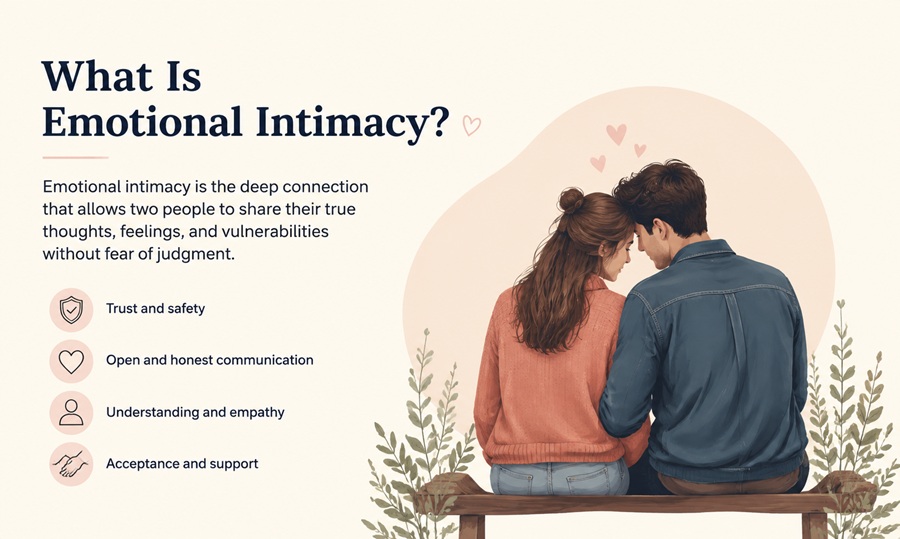
Emotional intimacy is the sense of being deeply known and accepted by another person — including your fears, history, and inner world, not just surface-level facts. It’s built through consistent vulnerability, not a single big conversation, and it’s distinct from physical or intellectual closeness, though it often overlaps with both.
Emotional Intimacy vs. Other Kinds of Closeness
People often lump every form of closeness together, but they’re not the same thing.
Physical Intimacy
This is about touch and physical closeness. Couples can have this without much emotional depth — plenty of relationships are physically close but emotionally distant.
Intellectual Intimacy
Sharing ideas, debating, enjoying each other’s minds. Great, but still not the same as feeling emotionally safe with someone.
Emotional Intimacy
The layer underneath both — the sense that you could say the hardest, most unpolished version of a thought out loud and still be met with care instead of judgment.
What Emotional Intimacy Actually Looks Like Day to Day
It’s rarely a single dramatic conversation. It looks more like:
- Telling your partner you’re anxious about something before you’ve fully processed why
- Being told “that sounds hard” instead of immediately getting advice you didn’t ask for
- Feeling safe enough to sit in silence together without it feeling awkward
- Knowing the specific things that upset your partner, and why, not just that they get upset
How It’s Built
1. Small, Repeated Disclosures
Emotional intimacy grows more from a hundred small honest moments than one big vulnerable conversation. Mentioning you had a rough day, admitting you’re nervous about something small — these add up.
2. Responsive Listening
The response matters as much as the disclosure. A partner who listens, reflects back what they heard, and doesn’t rush to fix things builds intimacy faster than one who jumps straight to solutions.
3. Consistency Over Time
Trust that someone will respond well doesn’t form from one good conversation — it forms from a pattern, tested repeatedly, of being met with care instead of dismissal.
4. Repair After Rupture
Every relationship has moments of disconnect. Emotional intimacy deepens specifically in how a couple repairs after those moments, not in avoiding them altogether.
Signs Emotional Intimacy Might Be Missing
- Conversations rarely go past logistics — schedules, errands, plans
- One or both partners feel lonely even while together
- Vulnerability is met with dismissiveness, jokes, or immediate problem-solving
- Neither partner brings up feelings unprompted
None of these are permanent verdicts — they’re usually signs worth addressing directly, often with the help of a couples therapist if the pattern feels stuck.
A Simple Way to Practice It This Week
Try asking your partner one question you don’t already know the answer to — not a fact-based one, but something like “what’s been on your mind lately that you haven’t said out loud.” Then practice listening without jumping to advice.
Frequently Asked Questions
Can emotional intimacy exist without physical intimacy?
Yes — many close friendships and some romantic relationships have deep emotional intimacy without a physical component.
Why does emotional intimacy fade in long relationships?
Often it’s not conflict but routine — couples stop asking each other anything beyond logistics as life gets busier.
Is emotional intimacy the same as trust?
Related but not identical — trust is the belief someone won’t hurt you; emotional intimacy is the felt experience of actually being known by them.
Can emotional intimacy be rebuilt after it’s lost?
Yes, though it usually takes intentional effort and often benefits from professional support if the disconnect has gone on for a long time.
Is one partner usually more emotionally open than the other?
Very commonly, and that gap is workable — the less-open partner can build the skill gradually rather than needing to match instantly.
Emotional intimacy isn’t something you either have or don’t — it’s something you build, lose a little, and rebuild constantly, in conversations most people wouldn’t think to call significant at the time.