
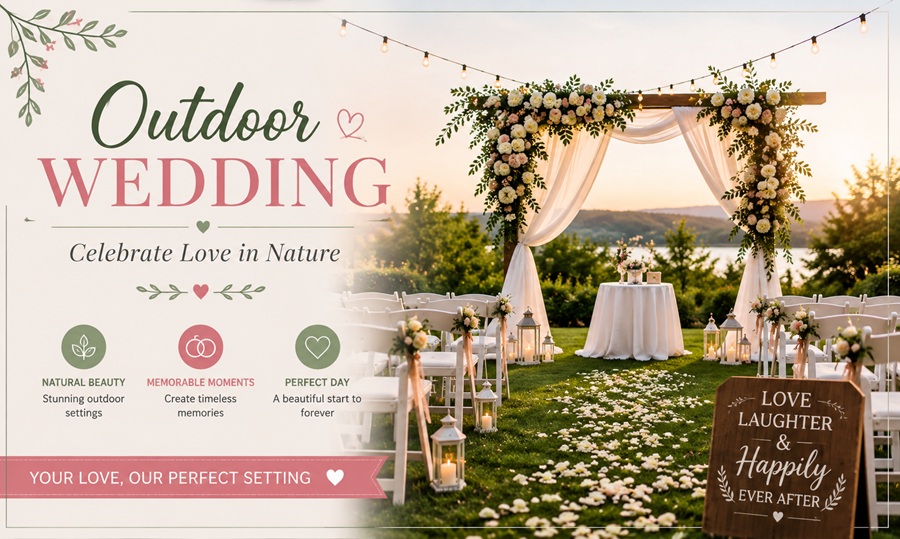
Planning an outdoor wedding starts with choosing a venue that offers a weather backup plan, booking 9–12 months ahead for peak season dates, and confirming permits early. Season and location both significantly affect guest comfort, so plan around your region’s actual weather patterns, not just the calendar date.
Outdoor weddings offer something indoor venues can’t fake — natural light, open space, and a backdrop that doesn’t need much decorating. But they also introduce variables indoor venues don’t have to think about, starting with the weather. A little structured planning early on prevents most of the common outdoor wedding headaches.
Step 1: Choose the Right Venue
Look for venues that already have some kind of weather contingency built in — a tent option, a nearby indoor space, or a covered pavilion. Venues without any backup plan put the entire wedding at the mercy of a single day’s forecast, which is a risk few couples want to take on their wedding day.
Step 2: Time It With the Season
| Season | Pros | Considerations |
| Spring | Mild temperatures, blooming scenery | Higher rain probability in many regions |
| Summer | Long daylight hours, peak greenery | Heat can be intense for guests midday |
| Fall | Comfortable temps, scenic foliage | Popular season means higher venue demand |
| Winter | Lower venue costs, unique aesthetic | Limited to warmer climates for true outdoor ceremonies |
Step 3: Plan a Real Weather Contingency
“We’ll just hope it doesn’t rain” isn’t a plan. A real weather contingency means a tent reserved in advance (not booked the week of), a clear decision-making timeline for who calls it and when, and a rain-day version of the seating chart and vendor logistics worked out ahead of time.
Step 4: Handle Permits and Logistics Early
Public parks, beaches, and many private outdoor venues require permits, and some cap guest counts or restrict amplified sound after certain hours. Confirm restroom access, parking capacity, and power access for vendors — these logistics are easy to overlook until the week of the wedding, when it’s too late to fix them cheaply.
Step 5: Plan Décor and Vendor Needs Around the Outdoors
Outdoor settings mean florals need to hold up in heat, candles need wind protection, and paper goods (place cards, programs) benefit from a weight or clip so they don’t blow away. Vendors like caterers and DJs may also charge more for outdoor setups due to generator or equipment needs — ask early so it doesn’t become a budget surprise.
| TIP
Build a 30-minute buffer into the ceremony start time on your day-of schedule specifically for outdoor weddings — sun position, wind, and last-minute weather checks tend to eat into the timeline more than couples expect. |
Guest Comfort Considerations Couples Often Overlook
Outdoor guests deal with variables indoor guests never encounter — sun exposure, uneven ground for heels, bugs, and temperature swings between afternoon and evening. Small additions go a long way: a basket of sunscreen and bug spray near the entrance, a shaded area for guests to retreat to during a hot ceremony, or blankets available as the evening cools down. None of these are expensive, but all of them noticeably improve the guest experience at an outdoor event.
Footwear and Terrain
Grass, gravel, and sand are all difficult for standard heels. Some couples provide a basket of flip-flops or flats for guests to switch into, or choose a venue with paved or matted walkways specifically to avoid this. It’s a small detail, but one that guests notice and remember.
Sound and Amplification Outdoors
Sound behaves very differently outside than in an enclosed room — wind can carry vows away from guests seated even a short distance back, and many public outdoor venues restrict amplified sound after certain hours. A simple wireless lapel microphone for the officiant and couple solves most of this, and it’s worth testing on-site during a walkthrough rather than assuming the acoustics will work out on the day.
Budgeting for an Outdoor Wedding
| Expense | Why It’s Often Underestimated |
| Tent rental | Costs more than expected once flooring and lighting are added |
| Restroom rentals | Required at venues without existing facilities, often overlooked in early budgets |
| Generator/power | Vendors need power for catering equipment, sound, and lighting |
| Additional insurance | Some public venues require liability coverage not needed indoors |
A Sample Outdoor Wedding Day Timeline
- Morning: vendor setup, weather check, final walkthrough
- Early afternoon: hair, makeup, and photos in available shade
- Late afternoon (about 90 min before sunset): ceremony
- Early evening: cocktail hour as temperatures cool
- Evening: reception, with lighting plan accounting for full darkness
Frequently Asked Questions
How far in advance should I book an outdoor wedding venue?
For peak season (late spring through early fall), 9 to 12 months ahead is typical to secure popular dates.
What’s the biggest mistake couples make with outdoor weddings?
Not having a real weather contingency — assuming good weather instead of planning for the alternative.
Are outdoor weddings cheaper than indoor ones?
Not always — some outdoor venues require rentals (chairs, tents, lighting, restrooms) that indoor venues already include, which can offset the savings.
What time of day works best for an outdoor ceremony?
Late afternoon, roughly 90 minutes before sunset, tends to offer the most comfortable temperatures and flattering light.
Do I need a permit for a public park wedding?
In most cities, yes — check with the local parks department well in advance, since some locations cap guest counts or require insurance.
How do I keep guests comfortable at an outdoor wedding?
Provide shade, sunscreen or bug spray, and blankets for cooler evenings — small additions that noticeably improve the guest experience.
Do outdoor ceremonies need a microphone?
Yes, in most cases — wind and open space can easily carry vows away from guests without amplification.
Lighting an Outdoor Wedding as the Sun Goes Down
One of the most common outdoor wedding oversights is underestimating how quickly usable light disappears once the sun sets, especially in venues without existing overhead lighting. String lights, lanterns, and pathway lighting aren’t just decorative — they’re functional necessities for guest safety once darkness falls, and they typically need to be arranged and tested well before the reception starts rather than as an afterthought. Couples working with a planner should confirm lighting plans specifically for the transition period between dusk and full darkness, since that window often catches people off guard.
Insurance Considerations Specific to Outdoor Events
Wedding insurance is worth considering for any wedding, but it carries extra relevance outdoors given the added weather risk. Event insurance can cover cancellation or rescheduling due to severe weather, while liability coverage protects against accidents on uneven outdoor terrain. Many public venues require proof of liability insurance as a condition of the permit, so it’s worth confirming this requirement early rather than scrambling for coverage close to the date.
A backyard wedding offers the most personal, budget-friendly setting but usually requires the most DIY effort — renting tables, chairs, restrooms, and lighting from scratch, plus handling any neighborhood noise ordinances. A public park is often more affordable than a dedicated venue but comes with permit requirements and less control over the space, including the possibility of sharing the area with other park visitors. A dedicated outdoor wedding venue costs more but typically bundles infrastructure — restrooms, power, an existing weather contingency — that removes much of the coordination burden from the couple.
Working With Vendors Who Have Outdoor Experience
Not every caterer, florist, or DJ has experience working outdoors, and it shows in small but important ways — florals that wilt by the ceremony, a sound setup that wasn’t built for open air, or a catering plan that didn’t account for keeping food at safe temperatures without an indoor kitchen nearby. When vetting vendors for an outdoor wedding, ask directly about their outdoor experience and request references from a previous outdoor event specifically.
An outdoor wedding rewards early planning more than almost any other venue choice. Lock in the weather backup, confirm your permits, and the rest of the day can focus on what outdoor venues do best — the scenery.